
Cyber Security Awareness Poster
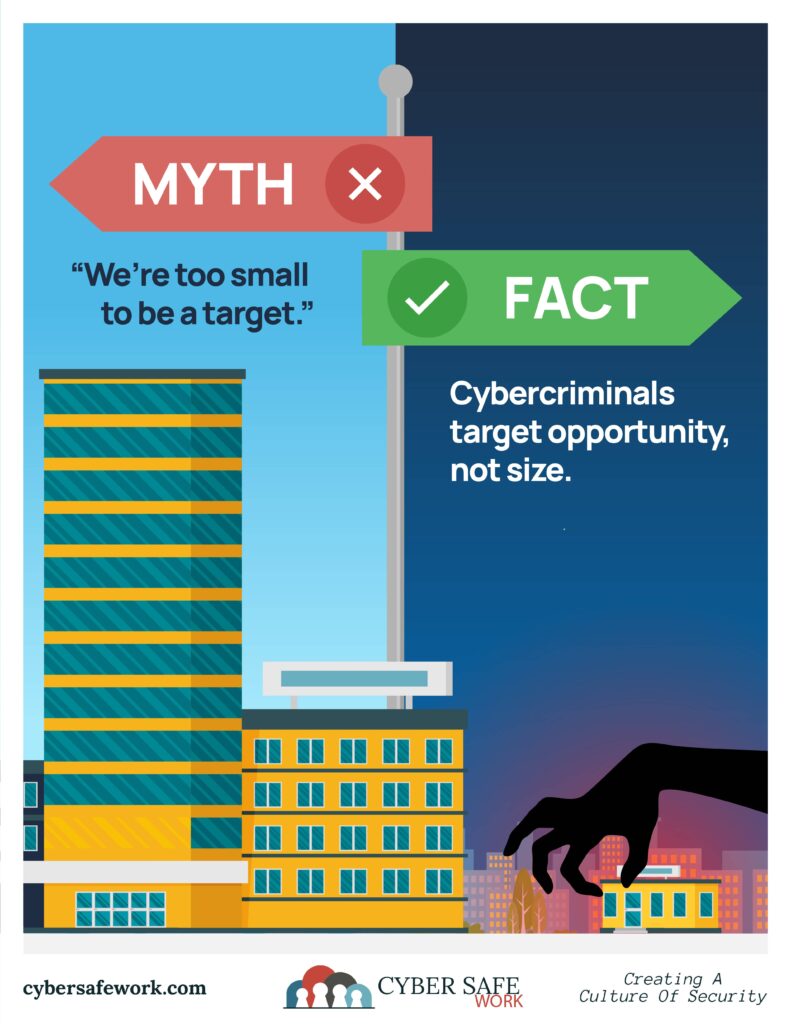
Cybersecurity Myth: We’re Too Small to Be a Target
Cybercriminals target opportunity, not size.
It’s a common misconception among small business owners: “Hackers won’t bother with us? We’re too small to be worth their time.”
Cybercriminals don’t always go after large corporations with millions of dollars in revenue. Small businesses, local organizations, and even nonprofits can be attractive targets, especially when they lack the security measures needed to protect their systems and information.
The truth is that no organization is too small to experience a cyberattack. Understanding why smaller businesses are targeted is the first step toward better cybersecurity.
Why Do Cybercriminals Target Small Businesses?
The headlines are usually the same: major corporation hit with cyber attack. Hospital data leaked. Government agency’s data held ransom. These incidents attract widespread attention because of the number of people affected and the financial losses involved.
However, smaller organizations face many of the same cybersecurity threats, often with fewer defense resources.
Cybercriminals may prefer targeting small businesses because they believe those organizations have weaker passwords, outdated software, limited employee training, or inadequate backup procedures.
In many cases, attackers aren’t even choosing a particular business. Automated tools scan the internet for vulnerable websites, exposed systems, and compromised credentials. If a small business has a weakness, it can become a target regardless of its size.
What Do Small Businesses Have That Hackers Want?
Large amounts of money do not make an organization appealing. Even the smallest organizations typically maintain valuable information, including customer contact details, employee records, financial documents, email accounts, and login credentials.
Cybercriminals can use this information for identity theft, financial fraud, or unauthorized access to other systems.
Some attackers aren’t interested in stealing information at all. Instead, they may use ransomware to lock important files and demand payment to restore access. Others may compromise business email accounts to send fraudulent invoices or trick customers into transferring money.
A cyberattack can also disrupt daily operations, leaving employees unable to access the tools and information they need to do their jobs.
For a small business, even a temporary interruption can create significant financial and operational challenges.
Common Cybersecurity Threats Facing Small Businesses
Understanding how attacks occur can help organizations recognize potential problems before they become serious.
- Phishing Emails – Phishing is one of the most common ways cybercriminals attempt to gain access to business systems. Attackers send messages that appear to come from trusted sources, such as vendors, banks, coworkers, or software providers. These emails may ask recipients to click a malicious link, download an attachment, or provide sensitive information.
- Weak or Reused Passwords – Using simple passwords or reusing the same password across multiple accounts makes it easier for attackers to gain unauthorized access. If one account is compromised, reused credentials may allow criminals to access additional business systems.
- Outdated Software – Software updates frequently address security vulnerabilities that cybercriminals can exploit. Delaying updates on computers, websites, plugins, and business applications may leave organizations exposed to known threats.
- Ransomware – Many of the items listed above can lead to ransomware, which can encrypt files and prevent employees from accessing important business information. Attackers may demand payment in exchange for restoring access, although payment does not guarantee that files will be recovered.
- Business Email Compromise – Cybercriminals may impersonate business owners, employees, or vendors to request fraudulent payments or changes to banking information. These attacks can be especially convincing because they often resemble legitimate business communications.
How Can Small Businesses Improve Their Cybersecurity?
Protecting a business doesn’t necessarily require an enormous technology budget. Some of the most effective cybersecurity practices involve consistent procedures, employee awareness, and basic security tools.
Start with these important steps:
- Enable multifactor authentication (MFA). Add another layer of protection to email, financial accounts, and other critical systems.
- Keep software updated. Regularly install security updates for operating systems, applications, websites, and plugins.
- Use strong, unique passwords. Consider a password manager to help employees create and maintain secure credentials.
- Back up important data. Maintain reliable backups and periodically test whether information can be restored.
- Train employees to recognize suspicious messages. Encourage staff to verify unexpected requests, especially those involving money or sensitive information.
- Limit account access. Give employees access only to the systems and information necessary for their responsibilities.
- Develop a response plan. Establish who employees should contact and what steps to take if a potential security incident occurs.
These precautions won’t eliminate every threat, but they can significantly reduce risk and help businesses respond more effectively when something goes wrong.
Cybersecurity Is Everyone’s Responsibility
A business can invest in security software, firewalls, and monitoring tools, but employee awareness remains an important part of its defense.
One convincing phishing email or fraudulent payment request can create problems for an entire organization.
Employees should feel comfortable questioning unusual requests, reporting suspicious activity, and asking for help when something doesn’t look right.
Creating a workplace culture where cybersecurity is discussed regularly helps employees recognize that protecting business information is part of their everyday responsibilities.
No Business Is Too Small to Be a Target
Cybercriminals aren’t necessarily looking for the biggest organization. They’re looking for an opportunity.
Whether your business has five employees or five hundred, protecting your systems, accounts, and information should be a priority.
The good news is that small steps can make a meaningful difference. Strong passwords, regular updates, reliable backups, and informed employees can help reduce vulnerabilities and protect your organization from common cyber threats.
Don’t let the size of your business give you a false sense of security. Cybersecurity matters at every level.
CourseVector grants permission to use this artwork for any non-commercial purpose as long as the CourseVector contact information remains, as is, on any reproduction or use.
