
In the realm of digital marketing, where the ground is constantly shifting beneath our feet, few elements remain as crucial—and as elusive—as mastering Google’s search engine optimization (SEO). For years, marketers have been engaged in a high-stakes chess game with the algorithms that determine online visibility. But what if, in the midst of this complex dance, a hidden playbook was suddenly unveiled?
In this article, we delve into the implications of an unprecedented data leak, exploring how it could reshape the landscape of SEO and what it means for your digital marketing efforts. Prepare to rethink your strategies, challenge your assumptions, and discover new pathways to online success. Welcome to a moment of profound revelation in the ever-evolving world of search engine optimization.

Google’s data leak, and what it means for your SEO strategy
According to various sources, it seems like Google has changed its SEO requirements yet again. Documents were leaked including terms like “goodClicks” and “unsquashedClicks,” leading some to believe the context of a click matters more than we previously thought. These new terms suggest that Google is prioritizing the quality and context of user interactions over mere click-through rates. “GoodClicks” might refer to clicks that lead to meaningful user engagement, while “unsquashedClicks” could imply clicks that were not manipulated by clickbait or misleading tactics.
In addition to “goodClicks” and “unsquashedClicks,” Google has many terms we know little about. For instance, their documents have included terms such as “isCovidLocalAuthority” and “isElectionAuthority,” which seem to weigh sources deemed as an Authority more heavily than others. This may be a major change for those in the news field, who might be hidden by these preset sites or pages. This concept is known as “Domain Authority,” and may perhaps apply to more than just newsworthy sites. Not much is known about this besides that Google has these tags in their documents.
Also included in the document was references to Clickstream Data, which tracks at what part in a site the user completes an action. For example, clickstream data would show if a user reads half of an article and then clicks off, rather than the whole article. Branded searches were also mentioned, which measures the ratio of visits to your site from different sources. It counts how many visits are from links, and how many are from searches including your brand’s name. If there is a large difference between the two, it may affect the site’s ranking. Lastly, Google may individually demote sites for certain reasons. This may include poor site navigation, leading to an unsatisfying user experience, and lazy content such as product reviews.
Many search engine professionals feel that this data leak further proves that Google says one thing and does another, making it difficult for websites to show up on search results pages.
Is AI taking over search?
If you’ve used Google to search for anything lately, you may have noticed that some searches yield AI generated results that take up most of the screen. You need to scroll to even see any website listings!
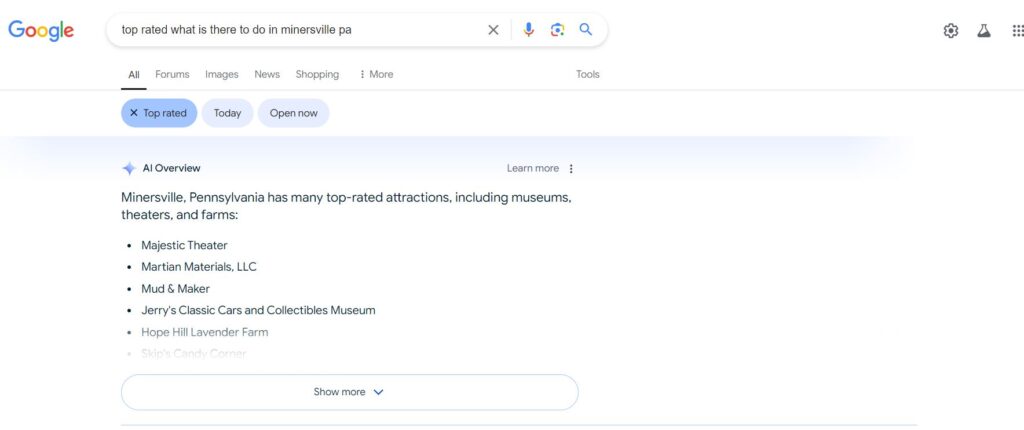
This seemingly harmless AI search “feature” has created controversy as it could prevent users from ever clicking through to a website. To explain this feature simply, it pulls information from a few websites and sums it up for the user in an icon at the top of the results. But if this pulls information from site A, and site B is linked in the summary, this could effectively prevent visitors coming to site A.
How does this affect your website?
This leak has significant implications for SEO strategies. Webmasters and content creators may need to focus more on creating valuable, engaging content that meets user intent rather than just optimizing for keywords. This change could particularly impact small and medium-sized enterprises (SMEs) that rely heavily on search engine visibility. They might face challenges adapting to these new metrics, potentially affecting their online traffic and revenue.
Moreover, this update has led to even more distrust between Google and its users. Google’s history of keeping their search result criteria under tight wraps makes it difficult for users and businesses to know when Google is being transparent. Past algorithm changes have sparked controversy and confusion, causing some sites to plummet while others thrive seeming at random. As Google continues to evolve its algorithms, comparisons with previous updates reveal a consistent trend towards enhancing user experience over technical SEO tactics.

SEO experts and industry analysts have mixed feelings about these changes. Some see it as a positive move towards better search results, while others worry about the increased complexity and unpredictability. Users should be cautious about misinformation on this topic due to its recentness. Relying on credible sources and expert analysis is crucial to understand the true impact.
How to combat changing algorithms
To stand against Google’s ever-changing policies, creating quality content and a solid user experience is the way to go.
Targeting tips to keep up with change algorithms
What should I focus on for keyword targeting?
Google emphasizes semantic search and user intent. Instead of basic keywords, create content that directly addresses audience needs. Use long-tail keywords and natural language to align with how users search.
How important is content quality according to the leak?
Content must be high-quality and authoritative to rank well. Focus on comprehensive, well-researched articles that provide genuine value to readers. Credible sources and rich information are crucial for ranking highly.
Why is User Experience (UX) critical for SEO?
UX factors such as page load speed, mobile-friendliness, and navigation ease significantly impact Google’s ranking algorithm. Investing in UX optimization is essential to enhance user satisfaction and improve search rankings.
What is E-A-T and how does it affect SEO?
Expertise, Authoritativeness, and Trustworthiness (E-A-T) are paramount. Google values content from authoritative sources and experts. Build your niche expertise, obtain credible backlinks, and maintain a professional online presence to leverage E-A-T.
How can structured data and rich snippets improve SEO?
Google relies on structured data to understand webpage content better. Implementing structured data, like schema markup, can enhance how your content appears in search results and increase click-through rates.
Why is local SEO gaining importance according to the leaked documents?
Google’s algorithm places increased importance on local search relevance and proximity. For businesses targeting local markets, optimizing Google My Business, gathering positive reviews, and using local keywords are essential strategies.
How does content freshness impact SEO rankings?
Google prefers fresh and updated content. Regularly updating your website with relevant information can boost search rankings. Develop a content calendar to maintain consistency and refresh older content with current data and trends.

These methods are known as ‘Organic SEO’ and should be used as often as possible. If you are to compete with other sites who pay to be at the top of the search results, you should add links, keywords, and engaging titles to yield the best results. The more often this process is repeated on new posts or pages, the more likely Google is to recommend your site to a potential viewer.
As Google makes their search results more secretive, you must keep up with good organic SEO. Google isn’t planning on sharing their search criteria any time soon, so playing the long game is key here. Paying for ads and placement will work well in the short term, but your site will probably fall back down shortly after your contract ends. Be smart, and plan ahead using these good SEO techniques.
Furthermore, with the ever-evolving landscape of SEO, staying informed about Google’s updates and adjusting strategies accordingly is crucial. Regularly updating your content to keep it fresh and relevant, ensuring mobile-friendliness, and enhancing page load speeds are all part of maintaining good SEO practices. Engaging with your audience through social media and encouraging user-generated content can also positively impact your site’s authority and visibility.
In summary, while Google’s constant changes to its SEO requirements can be frustrating and challenging, understanding and adapting to these changes can lead to long-term success. Prioritizing high-quality content, authoritative links, and user engagement will help you stay ahead in the competitive world of SEO. Keep an eye out for changes in Google’s search system, and be wary of misinformation on this topic due to the recentness of it. Stay informed, be adaptable, and focus on sustainable, organic growth to navigate the complexities of Google’s search algorithms.
