
Businesses and municipalities are facing increasing scrutiny when it comes to privacy regulations. While it may seem limited to those who interact with global visitors, the rules of digital engagement vary from state to state. Even with the landscape of privacy laws continually evolving, one thing remains certain: your company must be aware of, and comply with, these laws to ensure the safety of your customers’ personal data and to avoid costly penalties.
Whether you operate in the United States, Europe, or anywhere else around the globe, understanding your privacy obligations is not optional. This article will explore what this means for your business, particularly if you serve visitors from around the world, the potential consequences of non-compliance, and best practices for maintaining privacy and transparency.
Why Privacy Compliance Is Critical
Global Privacy Regulations: A Growing Patchwork
As of 2026, there will be 22 privacy laws in the US alone. There is no universal set of privacy rules that applies worldwide, but a growing number of countries are implementing their own regulations to safeguard consumer and employee data. Here are a few key laws you should be aware of:
- General Data Protection Regulation (GDPR) – Europe
- The GDPR, enacted in 2018, is one of the most stringent data privacy regulations globally. It mandates that companies, regardless of where they are located, must protect the personal data of individuals in the European Union (EU).
- GDPR imposes hefty fines (up to €20 million or 4% of global turnover, whichever is higher) for non-compliance.
- California Consumer Privacy Act (CCPA) – United States
- The CCPA grants California residents the right to know what personal data businesses are collecting about them, to request deletion of that data, and to opt out of the sale of their data.
- Non-compliance can result in fines of up to $7,500 per violation.
- California Privacy Rights Act (CPRA) is an amendment to CCPA that strengthens consumer privacy rights.
- Health Insurance Portability and Accountability Act (HIPAA) -United States
- HIPAA is a federal law that protects individuals’ medical information by setting standards for privacy, security, and the electronic exchange of health data.
- Noncompliance can lead to civil or criminal penalties.
- Payment Card Industry Data Security Standard (PCI DSS) – United States
- PCI DSS is an industry standard created by major credit card companies (Visa, MasterCard, American Express, Discover, and JCB) to protect cardholder data and prevent fraud. It focuses on how businesses handle, store, process, and transmit payment information, ensuring that customer financial data stays private and secure.
- Collecting credit card information online requires specific security scans to ensure the data is collected, transmitted, and stored properly.
- Failure to comply may result in fines and the inability to process credit cards.
- Other Jurisdictions
- Countries like Canada (PIPEDA), Brazil (LGPD), and Australia (Privacy Act) have also implemented stringent data privacy laws. In many cases, these laws share common principles, including the necessity of obtaining explicit consent before collecting or using personal data.
Given this fragmented yet interconnected regulatory environment, businesses must not only comply with local and industry specific laws but also consider the legal landscape of any country where they have customers or visitors. It gets even trickier if you need verify the age of your website’s users.
It is important to note that you must comply with the rules of the state or country of your users’ primary address. Every U.S. state has a breach notification law, and compliance depends on where the affected individuals reside, not just where the business or municipality is based.
The Risks of Violating Privacy Regulations
When companies neglect privacy rules, the consequences can be severe—both legally and reputationally. Here are a few examples of what can happen:
Financial Penalties
- Violating privacy regulations like the GDPR can lead to hefty fines, which can severely affect your bottom line. For instance, in 2019, British Airways was fined £183 million for a data breach that compromised the personal data of approximately 500,000 customers.
Reputational Damage
- Data breaches and non-compliance can erode customer trust. Negative publicity resulting from these violations can drive customers away, hurting your brand and reducing your customer lifetime value.
Legal Actions
- In some cases, customers or consumer groups may file lawsuits for damages caused by mishandling their data. For example, in the wake of the Cambridge Analytica scandal, Facebook faced multiple legal actions and regulatory scrutiny for improper data handling.
What Happens if You Violate Privacy Laws: The Case of Automatic Mailing List Signups
One common mistake businesses make is automatically enrolling visitors in marketing programs like MailChimp without obtaining explicit consent. Let’s break down what happens if your website or transaction system signs up visitors automatically to receive marketing emails or newsletters, and why this is a potential legal issue.

1. Unlawful Consent and Deceptive Practices
Lack of Notice: When you automatically enroll a visitor in your MailChimp list (or any other email marketing platform), but fail to provide clear notice on the website or during the transaction process, you are essentially bypassing the requirement for informed consent. Consumers have a right to know what data is being collected, how it will be used, and what they are agreeing to.
Example: Let’s say a customer buys a product from your website and you automatically add them to your mailing list without making it clear during the checkout process that this will happen. If they receive promotional emails they did not sign up for, this could lead to complaints, and depending on jurisdiction, your company could be in violation of privacy laws like GDPR or CCPA.
2. Breach of GDPR and CCPA Requirements
Both the GDPR and CCPA require explicit consent before companies collect or process personal data for marketing purposes. This means that if you automatically add a user to your mailing list account without obtaining their express permission, you could face fines and legal action. Under GDPR, this is often referred to as “opt-in” consent, and the lack of it could result in significant penalties are agreeing to.
3. Reputational Fallout
Even if the legal consequences are minor, customers may feel betrayed by this behavior, leading to a loss of trust in your company. If customers feel that their data is being misused, they may share their dissatisfaction on social media, impacting your reputation.
The Importance of Providing an Opt-Out Mechanism
One critical component of privacy compliance is giving users the option to opt-out of marketing communications. This is a key principle in laws like the GDPR and CCPA, and it should be a best practice for any business that collects customer data for marketing purposes.
Clear Opt-Out Options
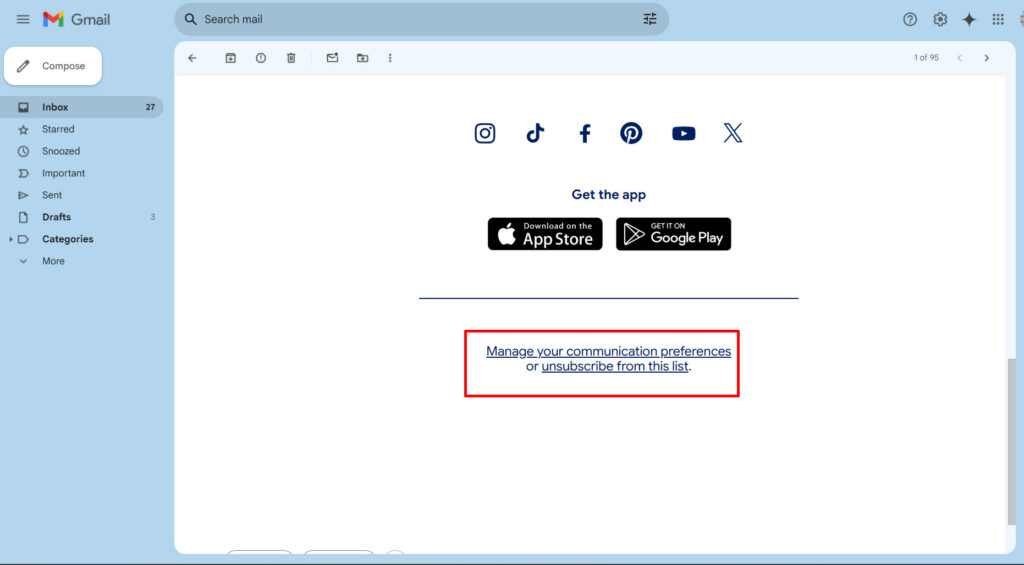
Customers should have an easy, transparent way to unsubscribe from marketing emails. This should be as simple as clicking a “unsubscribe” link in the email or changing preferences on your website. The process should not be cumbersome or require users to jump through hoops.
Giving Users Control
Allow customers to control the types of communications they receive. By providing granular control over their preferences (e.g., opting into newsletters, promotional emails, or event notifications), you not only comply with privacy laws but also improve customer satisfaction and engagement.
It’s important to note that in some states, notices of control of data must be disclosed at the time of collection. This is “Informed Consent” mentioned above. It cannot be done after the fact. Since data collectors are on the hook for the state in which the customer lives not the state in which the transaction occurs, it’s smart to work toward compliance with the most strict data compliance rules rather than the most lax.
It’s important to remember that each state has it’s own exemptions for privacy laws. For example, some states may exempt nonprofits while others don’t. Some states have higher thresholds for applicability than others.
Best Practices for Ensuring Privacy Compliance
Here are several key practices your business should adopt to avoid privacy violations:
- Obtain Explicit Consent: Always ask for clear, informed consent before collecting or using someone’s personal data. This can be in the form of a checkbox or an opt-in mechanism at the time of a transaction or registration.
- Provide Transparency: Make sure users are fully aware of what data you are collecting, why you are collecting it, and how it will be used. Use clear and accessible privacy policies that outline your data handling practices.
- Maintain an Easy Opt-Out Process: Offer clear and simple ways for customers to unsubscribe from marketing communications or delete their personal data.
- Review Privacy Laws Regularly: Given the fast-paced evolution of privacy regulations worldwide, it is crucial to regularly review your practices to ensure compliance with the latest laws in the regions where your customers reside.
- Ensure Third-Party Compliance: If you’re working with third-party services (e.g., MailChimp, Google Analytics, etc.) that collect personal data, ensure that they are also compliant with relevant privacy laws. You may be held liable for their actions if their practices violate regulations. It is also important to keep a list of your vendors. You need to know with whom you’re sharing data should you be asked.
- Collect Only What You Need: Some of the newer laws in the US limit the collection and use of the collection of data. It’s not acceptable to collect information just because you want it. You may only collect the data you need to do business with your customers. And remember, you are liable to the state in which the customer lives, not the state in which you’re doing business.
- Let Us Know Your CPO: Some states also require consumers have an avenue to contact your business when it comes to consumer rights and their personal data. If you company has a chief privacy officer, that’s the person who belongs on your privacy policy. In some companies, this persona may wear multiple hats and be an appointed roll. That’s ok as long as your customers have somewhere to turn when they have concerns about the collection of their data.
Conclusion
Understanding and complying with privacy laws is a responsibility that all businesses must take seriously. Whether you are operating in the U.S., Europe, or beyond, failing to adhere to privacy regulations can result in significant fines, legal action, and irreparable damage to your reputation. By adopting best practices like obtaining explicit consent, providing opt-out options, and maintaining transparency, your business can avoid these pitfalls and foster trust with your customers worldwide.
Remember, privacy is not just a legal obligation—it’s an integral part of building strong, lasting relationships with your customers.
